
SHP Conference, Leeds 2026
Teaching as Story-Making: Creating Contexts for Learning in Primary History
Thank you for attending my workshop at the Schools History Project Summer Conference 2026.
This page includes the links and sample materials shared during the session. The workshop explored how Teaching as Story-Making can be used to create meaningful contexts for primary history, where students are given a purposeful role, a responsibility, and a reason to use historical knowledge.
Rather than treating history as just information to be delivered, Teaching as Story-Making builds learning around a developing context. Students work as if they are a responsible team inside a story-shaped situation. They investigate evidence, ask questions, make decisions, record findings, and gradually build the knowledge they need to understand the past more deeply.
Workshop focus
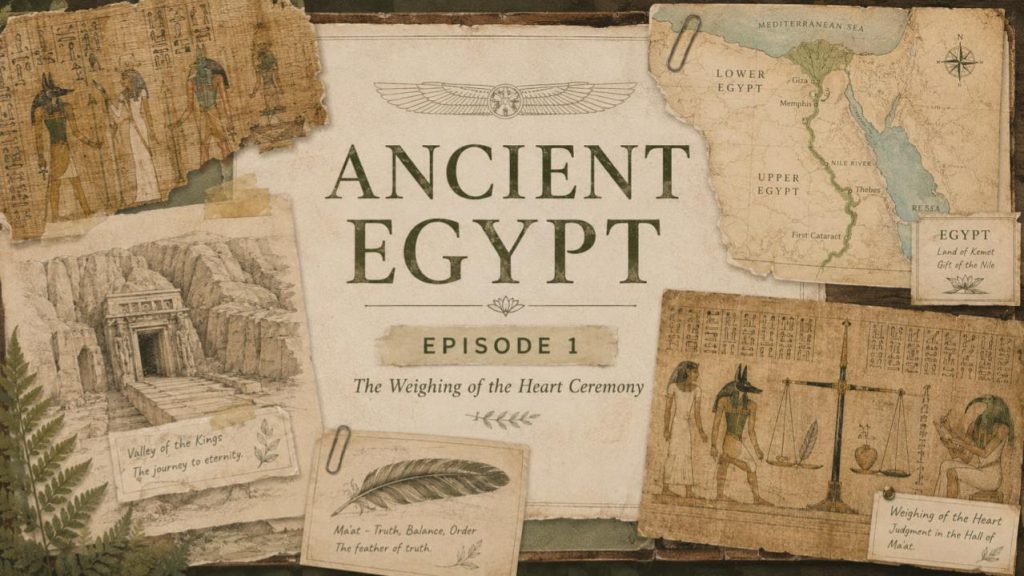
In the workshop, we looked at an Ancient Egypt context in which the students represent a team of archaeologists working with the Cairo Museum. The team is asked to investigate the discovery of a previously unknown tomb in the Valley of the Kings.
The context is designed to create a need for historical enquiry. Students are not simply learning about Ancient Egypt from the outside; they are drawn into a situation where they need to examine evidence, interpret clues, ask careful questions, and make responsible decisions. The situation requires the need to know.
Teaching as Story-Making Planner
You can explore the TSM planning tool here:
Open the Teaching as Story-Making Planner
The planner is designed to help teachers build curriculum-rich contexts for learning. It supports the development of purposeful historical enquiry by helping teachers think through:
- the team the students will represent;
- the client, commission or responsibility;
- the situation that creates tension or purpose;
- the curriculum knowledge being introduced;
- the sequence of episodes;
- the materials, images, documents and tasks that will bring the context to life.
Sample plans from the workshop
The following are sample plans and slides made using the TSM Planner:
They show how the Ancient Egypt context can be developed through episodes, classroom conventions, images, evidence, discussion, reading, writing and teacher-in-role.
What the approach is trying to do
Teaching as Story-Making is not about making history more “fun” by adding a story on top. It is about using story as a structure for meaning.
The aim is to create a context where students need historical knowledge in order to think, speak, write and act with care. The story gives the learning purpose. The curriculum gives the story substance.
In a strong TSM context, students are invited to:
- examine evidence;
- notice details;
- raise enquiry questions;
- make inferences;
- use subject knowledge;
- listen to different perspectives;
- record findings;
- explain decisions;
- return to earlier thinking and revise it.
This makes history active, purposeful, engaging and intellectually demanding.
A simple starting point
One way to begin planning a Teaching as Story-Making context is to ask four questions:
- Who are the students going to be represented as?
- What important responsibility have they been given?
- What situation, problem or discovery creates the need for their work?
- What historical knowledge will they need in order to do that work well?
For example:
Topic: Ancient Egypt
Team: Archaeologists
Client: Cairo Museum
Situation: A new tomb has been discovered in the Valley of the Kings
Curriculum purpose: To investigate what tombs, artefacts, wall paintings and burial practices can reveal about belief, power, daily life and society in Ancient Egypt
Find out more
Teaching as Story-Making is currently being developed as a planning platform for teachers who want to create curriculum-rich, purposeful and imaginative learning contexts.
You can explore the planner here:
Teaching as Story-Making Planner
For more examples and background reading, visit: